
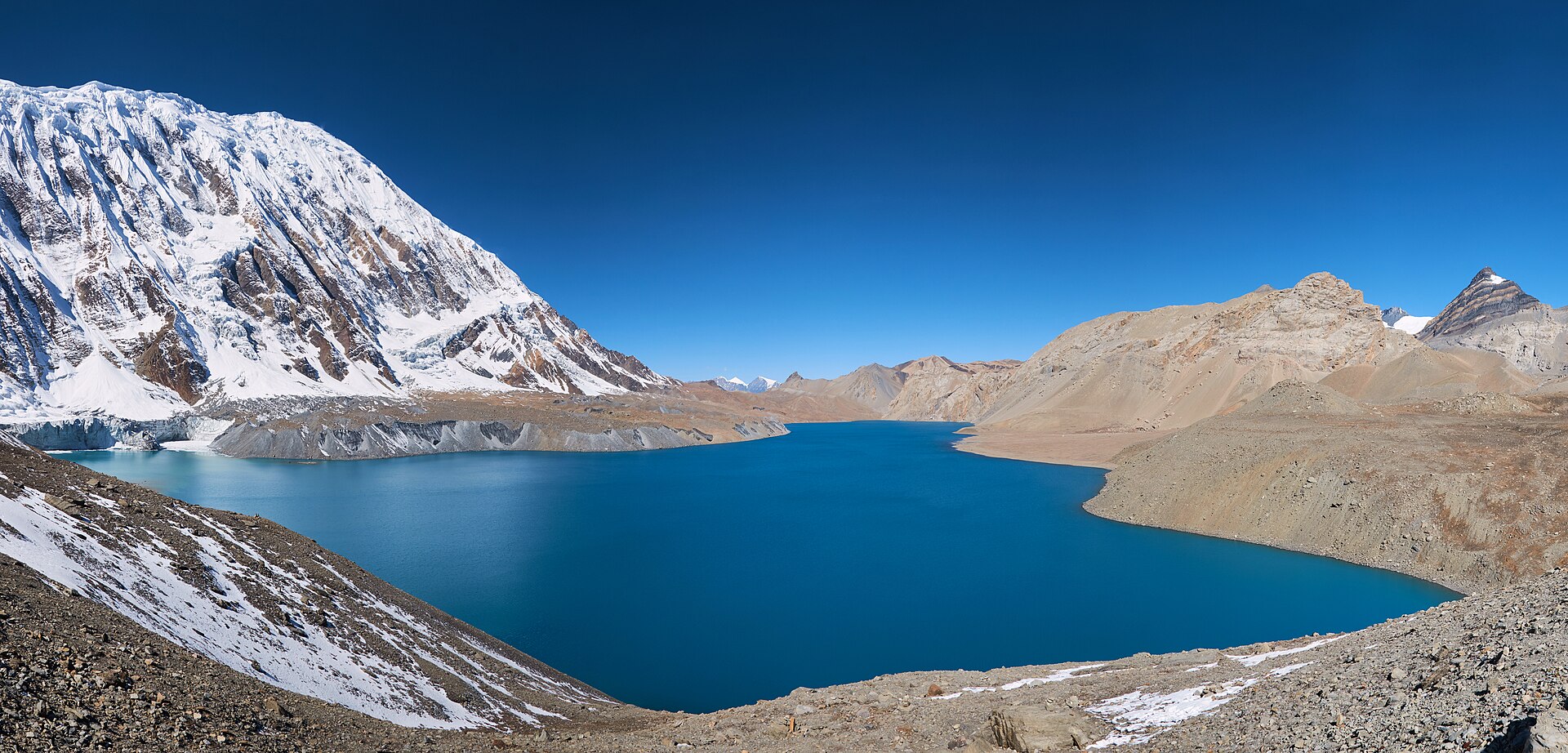
At nearly 4,920 metres above sea level, Tilicho Lake sits in a landscape that feels closer to the moon than to anywhere most travellers have stood before. Reached as a demanding side trip from the Annapurna Circuit, Tilicho draws trekkers not for convenience, none of this journey is convenient, but for the specific, singular experience of standing beside a body of water at an altitude where the sky itself seems to press closer.
This profile covers Tilicho’s altitude and size, the glacial forces that formed it, its dual significance to Hindu and Buddhist pilgrims, and what the demanding trek to reach it actually involves.
This guide covers Tilicho Lake’s altitude and scale, its glacial origin beneath Tilicho Peak, its religious significance, and the route and difficulty of the trek required to reach it.
Table of Contents
1. Altitude and Scale
2. Is Tilicho the Highest Lake in the World?
3. A Glacial Amphitheatre
4. Sacred to Both Hindus and Buddhists
5. The Route: A Demanding Side Trip
6. The Landslide-Prone Approach
7. Best Time to Trek
8. Altitude and Preparation
9. Common Misunderstandings About Tilicho Lake
10. Conclusion
1. Altitude and Scale
Tilicho Lake sits at approximately 4,919 metres in the Manang district of Nepal’s Annapurna Conservation Area, stretching roughly 4 kilometres in length and 1.2 kilometres in width across a surface area of about 4.8 square kilometres. Its average depth of around 85 metres, combined with its elevation, makes it the largest glacial lake in the Annapurna range and one of the highest lakes of comparable size anywhere in the world.
2. Is Tilicho the Highest Lake in the World?
Tilicho is frequently described as the world’s highest lake, a claim that requires some qualification. Following the 2019 discovery of the smaller Kanjin Sara Lake near Chame at approximately 5,002 metres, Tilicho no longer holds the outright elevation record, and other small, high-altitude bodies of water, including a crater lake above 6,000 metres in South America, sit considerably higher still. Tilicho’s genuine distinction is being one of the highest lakes of significant size that remains reachable on foot, a more precise claim than the simpler “world’s highest” framing.
3. A Glacial Amphitheatre
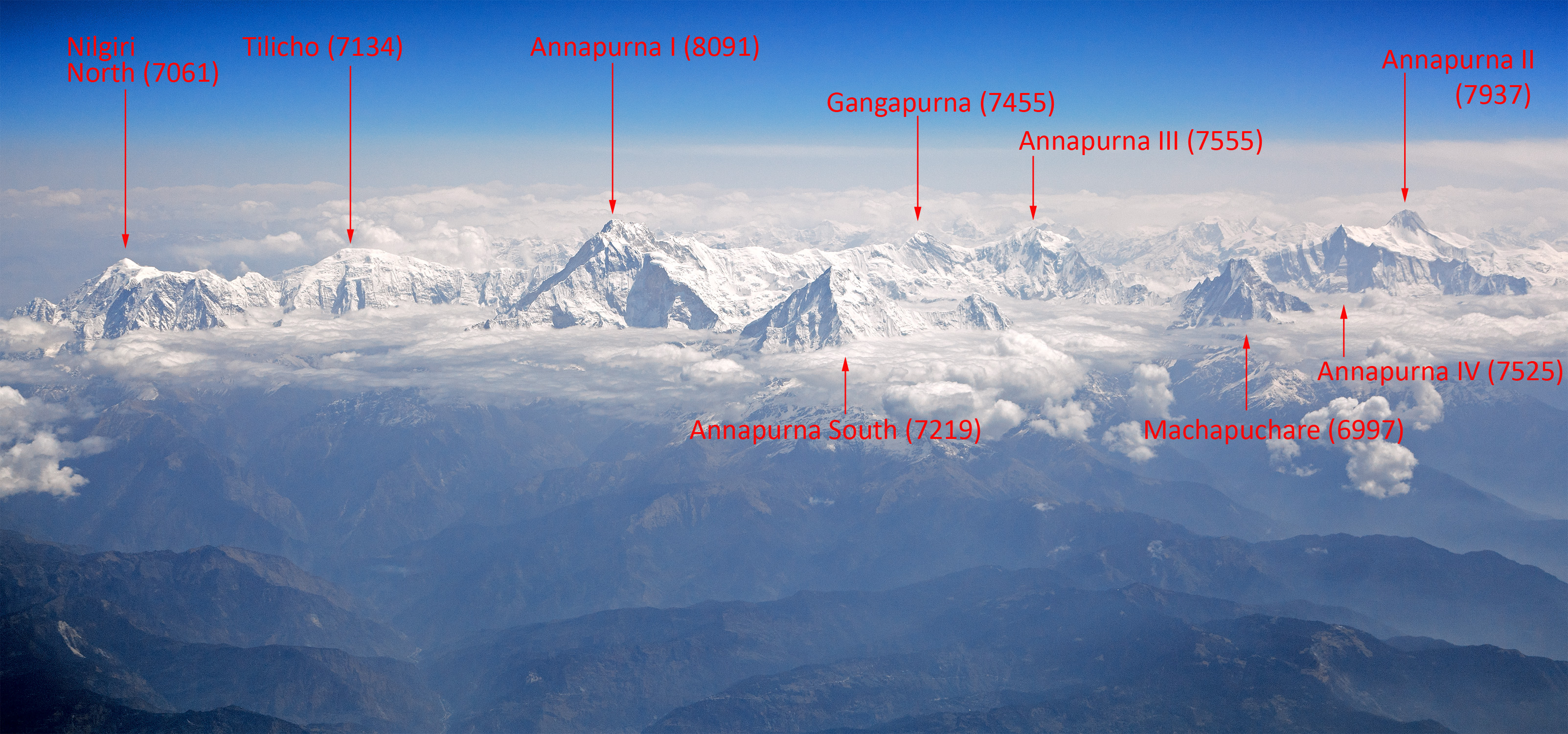
Tilicho Lake sits in a dramatic natural amphitheatre formed by glacial meltwater from the surrounding Annapurna Massif, framed directly above by Tilicho Peak at 7,134 metres and, to the north, by the Nilgiri Himal range. This setting, ice-capped peaks rising on three sides above a completely still lake surface, is what draws even trekkers already accustomed to Himalayan scenery to describe Tilicho as a genuinely singular sight.
4. Sacred to Both Hindus and Buddhists
For Hindu pilgrims, Tilicho holds deep scriptural significance as the lake identified with Kag Bhusundi from the Ramayana, where the sage Kak Bhusundi is said to have first narrated the epic to Garuda, king of the birds. Buddhist tradition separately reveres the lake as a site where the saint Milarepa is believed to have meditated, giving Tilicho a dual religious identity shared by relatively few sites in the Himalaya.
5. The Route: A Demanding Side Trip
Reaching Tilicho Lake typically adds several days to the standard Annapurna Circuit itinerary, most commonly approached via Manang and a base camp near Shree Kharka, with the final ascent gaining 500 to 600 metres across glacial moraine and windswept alpine ridges. A full Annapurna Circuit trek incorporating the Tilicho side trip generally runs 14 to 16 days, considerably longer and more demanding than the standard circuit alone.
6. The Landslide-Prone Approach
One specific stretch of the route, between Shree Kharka and Tilicho Base Camp, carries a well-known landslide risk that trekking operators consistently flag as the trip’s most hazardous section, particularly when wet or icy. Guides typically time this portion of the trek for early morning, when the loose scree and moraine slopes are most stable, rather than crossing later in the day when conditions can shift quickly.
7. Best Time to Trek
Spring, from March through May, and autumn, from September through November, represent the two established windows for the Tilicho Lake trek, offering the clearest visibility and most stable trail conditions at this altitude. Outside these windows, both winter snow accumulation and monsoon-season landslide risk make the route considerably more hazardous, and most established trekking agencies discourage attempts beyond the standard seasonal windows.
8. Altitude and Preparation
At nearly 4,920 metres, Tilicho sits well within the altitude range where mountain sickness becomes a genuine concern regardless of a trekker’s overall fitness level, making prior high-altitude experience and a properly staged acclimatisation schedule essential rather than optional. Most operators rate the trek as moderately to significantly difficult, reflecting both the altitude itself and the technical demands of the final approach across glacial terrain.
9. Common Misunderstandings About Tilicho Lake
Assuming Tilicho is definitively the highest lake in the world: since the 2019 discovery of the smaller Kanjin Sara Lake near Chame, Tilicho is more accurately described as one of the highest lakes of significant size reachable on foot, rather than the outright elevation record-holder.
Assuming the Tilicho side trip is a minor addition to the Annapurna Circuit: it typically adds several demanding days to the standard itinerary and includes a specifically hazardous, landslide-prone section that requires careful timing to cross safely.
Assuming Tilicho’s religious significance is purely Hindu: the lake holds meaningful status in Buddhist tradition as well, associated with the saint Milarepa, giving it a dual religious identity shared by relatively few Himalayan sites.
Assuming general trekking fitness is sufficient preparation: at nearly 4,920 metres, altitude sickness risk depends heavily on acclimatisation and ascent pacing rather than overall fitness alone, making prior high-altitude experience genuinely important.
10. Conclusion
Tilicho Lake’s reputation rests less on any single verifiable superlative than on the sheer scale of what it takes to stand beside it: a multi-day trek, a genuinely hazardous approach, and an altitude that leaves little margin for poor preparation. What awaits at the end, a vast, still lake ringed by ice on three sides, has convinced generations of trekkers that the claim to being one of the world’s highest lakes barely needs qualifying once you have actually seen it.
For Hindu and Buddhist pilgrims and secular trekkers alike, Tilicho occupies a rare category among Nepal’s lakes: a destination whose difficulty is not incidental to its appeal but genuinely part of it.


'/></svg>)