
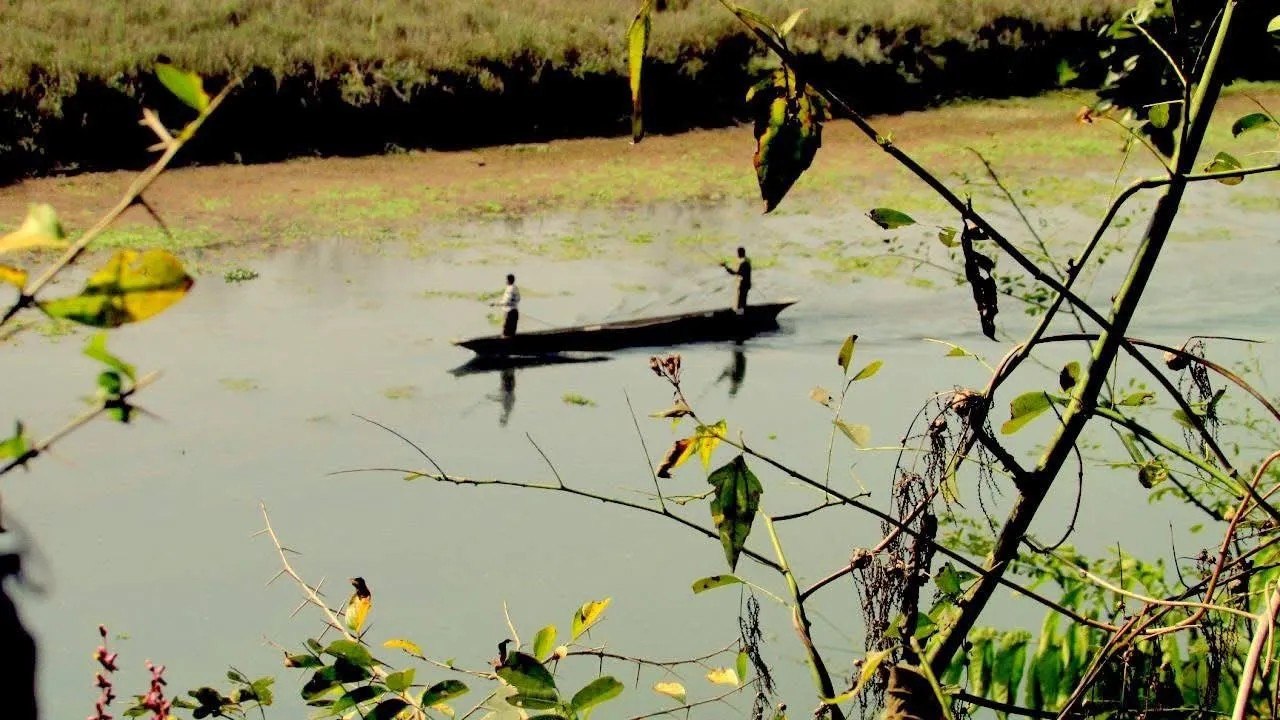
Most safaris move on wheels or on foot, but Chitwan National Park’s signature wildlife experience happens from a dugout canoe, drifting silently down the Rapti River at the pace the water itself sets. There’s no engine, no rattling jeep track, just a guide’s paddle dipping quietly at the stern while gharial crocodiles bask motionless on the sandbanks and kingfishers dart along the tree line above.
This slowness is precisely the point. Where a jeep safari covers ground quickly and a jungle walk moves cautiously through dense undergrowth, a Rapti River canoe float lets wildlife come into view gradually, often at remarkably close range, without the noise or disturbance of a motor. It’s typically the first activity of a Chitwan visit, both a gentle introduction to the park and one of its most reliably memorable moments.
This guide covers what a Rapti River canoe safari actually involves, what you’re likely to see, and how to make the most of it.
Table of Contents
What is the Rapti River Canoe Safari?
Why a Canoe Instead of a Jeep or Boat with a Motor
What You’ll See Along the Way
How the Float Fits Into a Chitwan Itinerary
Best Time of Day and Season to Go
What to Expect on the Water
What to Bring
Safety and Guide Etiquette
Tips for Getting the Most Out of It
Conclusion
What is the Rapti River Canoe Safari?
The Rapti River canoe safari is a guided float in a traditional dugout canoe along a stretch of the Rapti River bordering Chitwan National Park, typically lasting 30 to 60 minutes depending on the lodge and river conditions. A local guide steers from the rear using a single paddle, keeping the canoe close enough to the banks for good wildlife viewing while maintaining a safe distance from any animals encountered.
Dugout canoes have been used on this stretch of river for generations, long before Chitwan became a national park, and the low, simple design remains largely unchanged, valued for its quiet, minimal disturbance to the wildlife along the banks.
Why a Canoe Instead of a Jeep or Boat with a Motor
A canoe’s silence is its biggest advantage over any motorised alternative. Gharial and mugger crocodiles, easily disturbed by engine noise, will often remain still and visible on the banks as a canoe drifts past, an encounter a motorboat would likely cut short before it began.
The low vantage point also puts passengers closer to the water’s surface than a jeep safari ever could, offering a different visual perspective on the riverbank and the animals that live along it.
What You’ll See Along the Way
| Wildlife | Where You’re Likely to See It |
| Gharial Crocodile | Basking on sandbanks; Chitwan is one of the most reliable places in the world to see this critically endangered species |
| Mugger Crocodile | Slower stretches and muddy banks along the river |
| Kingfishers | Perched on overhanging branches, frequently spotted diving for fish |
| Egrets and Herons | Common along the shallows and sandbars throughout the float |
| Rhinoceros (occasional) | Sometimes visible drinking or bathing along the banks, though not guaranteed |
How the Float Fits Into a Chitwan Itinerary
Most lodges schedule the canoe float as the opening activity of a Chitwan stay, often immediately followed by a short jungle walk back to the lodge or a visit to the nearby gharial breeding centre. This sequencing works well logistically, since the float typically launches close to where jeep safaris and walking trails also begin, and eases visitors into the park before the more physically active jungle walk.
Best Time of Day and Season to Go
Early morning floats tend to offer the calmest water and the most active wildlife, as temperatures are still cool and animals are more likely to be out along the banks before the day heats up. The dry season, October through April, provides the clearest water and most stable, predictable river conditions, with December through February generally considered the most comfortable months for time on the open water.
What to Expect on the Water
The canoe sits low and stable in the water, seating four to six passengers plus the guide, moving at a gentle drift rather than an active paddling pace. Guides typically point out wildlife quietly as it appears, keeping voices low to avoid startling anything along the banks, and the overall pace is unhurried, closer to floating than paddling in the traditional sense.
What to Bring
A hat and sunscreen: Little shade exists over open water during the float
Binoculars: Useful for distant crocodile or bird sightings along the far bank
A camera with some zoom capability: Wildlife is often close, but not always close enough for a phone camera alone
Neutral-coloured clothing: Bright colours are more likely to disturb wildlife along the banks
Safety and Guide Etiquette
Canoe floats on the Rapti are generally low-risk, calm-water activities led by experienced local guides familiar with the river and its wildlife, though passengers should always follow the guide’s instructions, particularly around staying seated and avoiding sudden movements near basking crocodiles. Life jackets are typically provided and should be worn throughout the float.
Tips for Getting the Most Out of It
Book the earliest available slot: Morning light and cooler temperatures generally bring out the most visible wildlife
Stay quiet and still: Sudden movement or noise is the quickest way to send wildlife off the banks before you get a good look
Pair it with the gharial breeding centre: Many lodges combine the float with a nearby visit, adding useful context to what you’ve just seen in the wild
Don’t rush the experience: The float is short by design; resist the urge to check the time and let the pace set itself
Conclusion
Of everything Chitwan National Park offers, the Rapti River canoe float remains one of its quietest and most distinctive experiences, a low, silent drift past basking gharial crocodiles and riverside birdlife that no jeep or motorboat safari quite replicates. It asks little of visitors beyond patience and a bit of stillness, and rewards both generously.
For most travellers, it’s a short, unassuming start to a Chitwan visit, but often the moment that ends up defining the whole trip.


'/></svg>)