
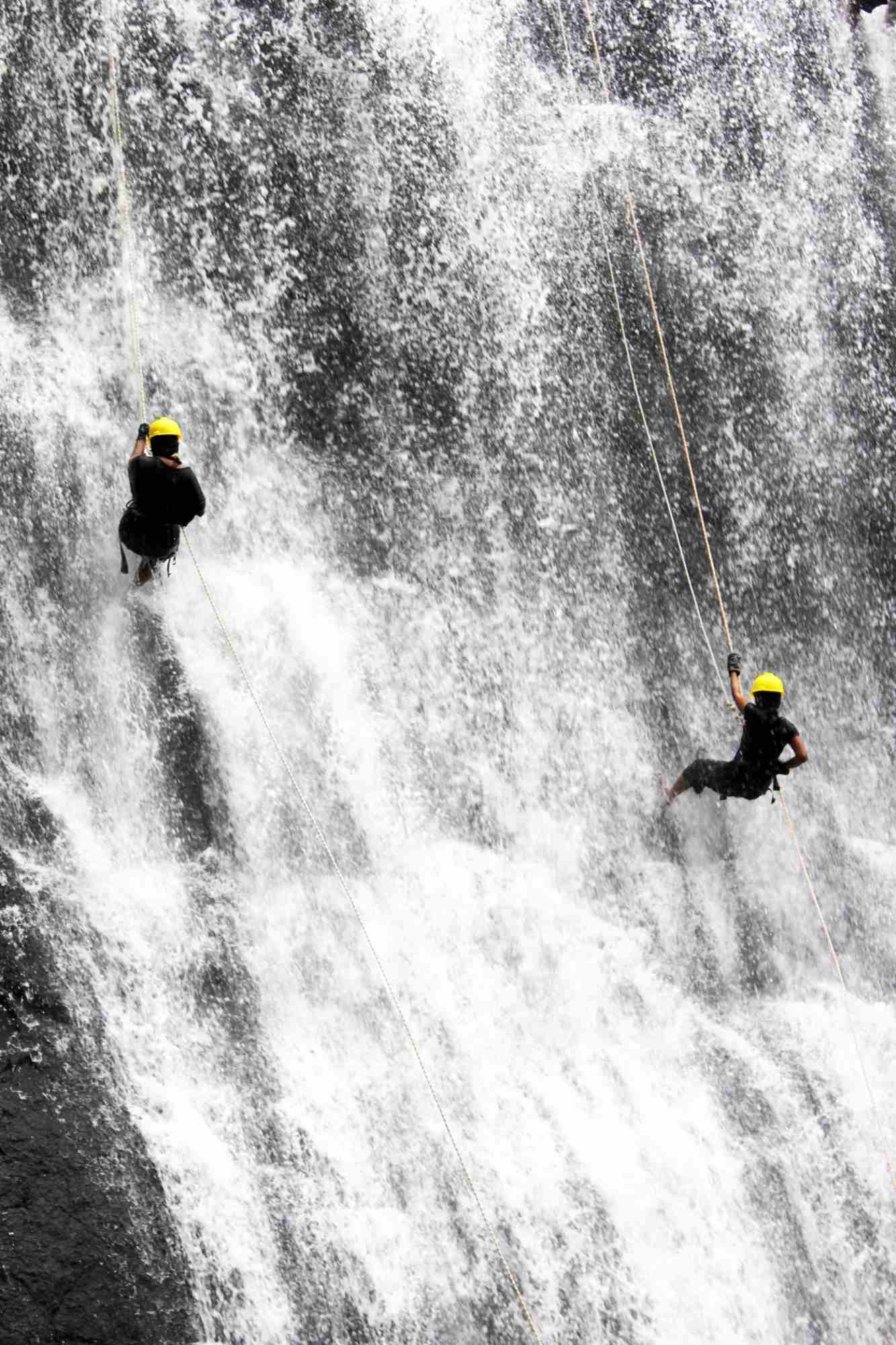
Sundarijal sits at the northeastern edge of the Kathmandu Valley, known mainly as the starting point for treks toward Helambu and Langtang. Fewer travelers know that the same steep, water-carved gorge above the village hides one of Nepal’s most accessible canyoning routes — a string of waterfalls you descend by rope rather than admire from a viewpoint.
Canyoning at Sundarijal means abseiling directly down the face of running waterfalls, jumping into plunge pools, and scrambling through a narrow river gorge, all within roughly an hour of central Kathmandu. It’s one of the very few adventure activities near the valley that puts you inside the water feature itself rather than beside it.
The route is run commercially by a handful of local operators using fixed and semi-permanent anchor points, which makes it far more approachable than it sounds — no personal canyoning experience or gear ownership is required, though a reasonable level of fitness and comfort with heights and water is essential.
This guide covers what canyoning at Sundarijal actually involves, how the descent is structured, what conditions to expect by season, and a complete gear and preparation list for a day dropping down Kathmandu’s hidden waterfalls.
Table of Contents
1. Why Sundarijal is Kathmandu’s Canyoning Gateway
2. How Canyoning at Sundarijal Developed
3. Why the Gorge and Water Levels Matter
4. Getting to Sundarijal
5. Types of Descents at Sundarijal
6. How to Plan Your Canyoning Day
7. Benefits of Canyoning at Sundarijal
8. What to Pack
9. Common Mistakes to Avoid
10. Best Practices
11. Conclusion
Why Sundarijal is Kathmandu’s Canyoning Gateway
Most adventure activities near Kathmandu involve looking at water or walking beside it — river rafting downstream, waterfall viewpoints along trekking trails. Sundarijal is different because the activity happens inside the watercourse itself, following a series of waterfalls down through a narrow gorge by rope.
Its real advantage is accessibility. Nepal’s more dramatic canyoning locations, such as those near Pokhara, require a multi-hour drive or flight from the capital. Sundarijal sits close enough to the Kathmandu Valley rim that a full canyoning day, drive included, fits comfortably into a single day trip.
How Canyoning at Sundarijal Developed
Sundarijal has long been significant to Kathmandu as the site of a major water supply reservoir and the traditional trailhead for treks into the Shivapuri Nagarjun National Park area and onward toward Helambu. The gorge above the village carries runoff from the surrounding hills down a steep, waterfall-stepped course.
Canyoning as an organized activity here is a more recent addition, developed by adventure tour operators who fixed anchor points along the falls and built the descent into a structured, guided experience. It remains a small, specialist activity compared to Nepal’s trekking and rafting industries, run by a limited number of operators rather than widely commercialized.
Why the Gorge and Water Levels Matter
A Stepped Series of Waterfalls
The Sundarijal gorge descends through a sequence of distinct waterfalls and plunge pools rather than one continuous drop, which is what makes it workable as a canyoning route. Each fall becomes its own abseil, broken up by scrambling, swimming, or short jumps between sections.
Canyoning groups and guides at Sundarijal generally point to a few defining features of the route:
- A close, easy-access gorge within an hour of central Kathmandu
- A series of distinct waterfall drops suited to roped descents
- Clear plunge pools for swimming between abseil sections
- Forested valley walls that keep the gorge shaded and cool
- A manageable full-day itinerary combining drive, descent, and return
Why Water Level Changes Everything
Because the entire route runs through an active watercourse, the volume of water flowing down the falls has an outsized effect on difficulty and safety. Monsoon-swollen water turns manageable abseils into serious hazards, while low winter flow can make some sections technically easier but colder. Operators typically adjust or close specific descents based on current water levels rather than running a fixed route year-round.
Getting to Sundarijal
Sundarijal lies at the northeastern edge of the Kathmandu Valley, reachable by taxi or private vehicle in roughly 45 minutes to an hour from most parts of the city. Most visitors book canyoning as an organized day trip through a local adventure operator, who typically handles transport, equipment, and guiding as a single package rather than something arranged independently at the gorge.
Because the activity depends on fixed anchor points and specialized safety equipment, canyoning at Sundarijal is not something to attempt without a licensed guide, regardless of prior outdoor experience.
Types of Descents at Sundarijal
Operators generally structure the gorge into sections that suit different comfort levels and time budgets:
| Descent Type | What It Offers |
| Introductory Route | A shorter sequence of smaller falls, suited to first-time canyoners and groups with limited time. |
| Full Gorge Descent | The complete waterfall sequence, combining multiple abseils, swims, and short jumps across a half-day or full-day outing. |
| Technical Sections | Taller or narrower drops within the gorge that call for stronger nerve and comfort with sustained rope work. |
| Swim-Through Pools | Connecting plunge pools between falls, offering a break from rope work and a chance to cool off mid-descent. |
How to Plan Your Canyoning Day
Book Through a Licensed Operator
Given the fixed-anchor, roped nature of the descent, canyoning at Sundarijal should be booked through an established local adventure operator with trained guides and inspected equipment, rather than approached independently.
Pick Your Season Deliberately
Post-monsoon and pre-monsoon months generally offer the most manageable combination of water flow and weather, while peak monsoon season (roughly June to September) can push water levels beyond safe operating conditions on some sections.
Benefits of Canyoning at Sundarijal
1. Unmatched Accessibility
No other canyoning route sits this close to Kathmandu, making it possible to fit a genuine waterfall descent into a single day away from the city.
2. A Different Kind of Adventure
Unlike hiking or rafting, canyoning puts you directly inside the waterfall system, combining rope skills, swimming, and scrambling in one activity.
3. Cool Relief From the Valley Heat
The shaded gorge and plunge pools offer a welcome escape from Kathmandu’s warmer months.
4. Guided, Structured Safety
Fixed anchors and professional guiding make the activity approachable for people without personal canyoning experience.
5. A Quiet, Uncrowded Experience
Compared to the valley’s busier trekking routes, Sundarijal’s gorge sees a fraction of the foot traffic.
What to Pack
Most technical gear — harnesses, ropes, and helmets — is provided by the operator. Personal preparation still matters for comfort and safety.
| Bring This | Skip This |
| Quick-dry athletic clothing worn under a wetsuit | Cotton clothing that stays soaked all day |
| Secure-fitting water shoes or old trainers | Sandals or flip-flops |
| A dry bag for personal items left with the guide | Loose valuables carried on your person |
| A change of full dry clothes for after | Assuming you’ll dry off before the ride home |
| Sunscreen and a hat for the approach walk | Skipping sun protection on the exposed trail sections |
| A basic energy snack and water for before/after | Heavy meals right before the descent |
Common Mistakes to Avoid
- Booking during peak monsoon without checking current water-level advisories
- Attempting the gorge independently without a licensed guide or fixed-anchor equipment
- Wearing cotton base layers that leave you cold throughout the descent
- Skipping the guide briefing on jump and abseil technique
- Bringing unsecured phones or cameras into the water sections
Best Practices
- Book with an operator that provides certified guides and regularly inspected equipment
- Confirm current water conditions and route status the day before your trip
- Follow your guide’s instructions closely on every abseil and jump
- Pack a full change of dry clothes and footwear for the ride back
- Disclose any relevant health conditions or fears of heights and water to your guide beforehand
Conclusion
Canyoning at Sundarijal turns a corner of the Kathmandu Valley most people associate with trekking trailheads into something far more visceral: a rope-and-water descent through a hidden sequence of waterfalls, all within an hour of the city. It asks more nerve than a hike and more commitment than a viewpoint photo, but it rewards that with a genuinely different way to experience the valley’s water and terrain.
For visitors and locals alike looking for an adventure activity that doesn’t require a multi-day trip out of Kathmandu, Sundarijal’s canyoning route is one of the valley’s best-kept options — best done with a licensed operator, sensible season timing, and a willingness to get thoroughly soaked.


'/></svg>)