
Introduction
Few countries pack as much altitude and habitat variation into so small an area as Nepal. Within a single country, the land drops from the highest peaks on Earth down through mid-hill forests into the warm, humid lowlands of the Terai. This dramatic range of elevation and climate is a major reason why Nepal’s birdlife is so varied, and it is the natural backdrop for the country’s national bird, the Himalayan Monal.
The official checklist maintained by the Department of National Parks and Wildlife Conservation and Bird Conservation Nepal places the country’s recorded bird species at over 900. This article introduces the national bird first, then looks at a selection of other species that stand out for their cultural, ecological, or visual significance, along with practical guidance on where and when to look for them responsibly.
What Is Nepal’s National Bird?
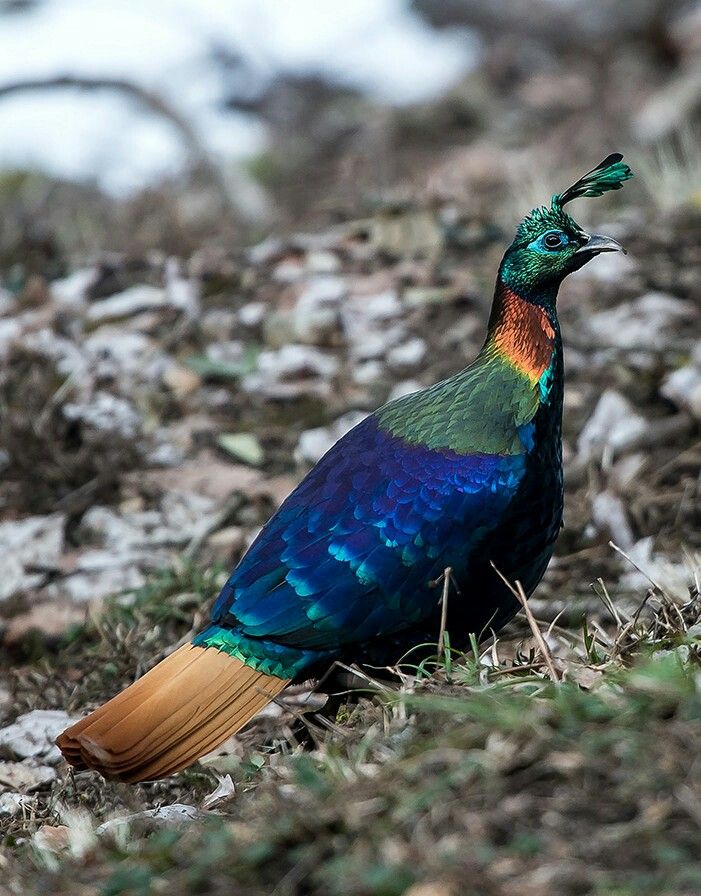
Nepal’s national bird is the Himalayan Monal, known locally as the Danphe or Danfe. Its scientific name, Lophophorus impejanus, commemorates Lady Mary Impey, wife of a former British chief justice of Bengal, who attempted to bring live specimens to England in the eighteenth century.
The male Himalayan Monal is one of the most visually striking pheasants in the world, with iridescent plumage that shifts between green, blue, purple, bronze, and copper depending on the angle of light, along with a distinctive crest. The female is far less colorful, with mottled brown plumage and white markings that provide effective camouflage in forest undergrowth, particularly useful during nesting.
The species inhabits Himalayan forests and shrublands, generally between about 2,100 and 4,500 meters in elevation, moving to higher alpine slopes in summer and descending into rhododendron and oak-conifer forest during winter. Its diet consists mainly of tubers, roots, seeds, berries, shoots, and insects, which it digs for using its strong, curved bill. The Himalayan Monal is currently assessed as Least Concern by the IUCN, and it is listed among Nepal’s nationally protected bird species.
Why the Himalayan Monal Is Important to Nepal
Cultural Importance
The Himalayan Monal has long been associated with Nepal’s national identity and is frequently referenced in Nepali songs and folk culture, reflecting its status as a widely recognized symbol of the country’s natural heritage.
Ecological Importance
As a ground-foraging bird of Himalayan forest and shrubland, the Himalayan Monal plays a role typical of pheasants in these ecosystems, disturbing soil and leaf litter while feeding and dispersing plant material in the process.
Tourism and Birdwatching
The species draws strong interest from birdwatchers and wildlife photographers due to its striking appearance and its association with high-altitude trekking routes, where a sighting is often considered a highlight of the trip.
Conservation
The Himalayan Monal is protected under Nepal’s national wildlife legislation and is included among the country’s officially protected bird species, even though its global IUCN status is Least Concern. This reflects Nepal’s own conservation priorities alongside the global assessment.
Where to Spot the National Bird
The Himalayan Monal has been recorded in forested and alpine areas across several of Nepal’s major protected regions, including parts of the Annapurna, Langtang, Sagarmatha, and Makalu Barun areas, as well as around Rara in the far west. It is generally found in mid- to high-elevation forest and open alpine terrain rather than in the lowlands.
Because the species moves seasonally, descending to lower forest in winter and climbing to alpine slopes in summer, the elevation at which it may be encountered shifts throughout the year. It has been recorded in these regions, but it is not commonly or reliably seen on every visit, and sightings should be treated as a possibility rather than an expectation, particularly for travelers on shorter treks who may not reach the bird’s preferred elevation or habitat.
Other Iconic Birds of Nepal
Beyond the national bird, Nepal is home to a number of species that stand out for different reasons, whether that is restricted range, striking appearance, conservation concern, or popularity among birdwatchers. The list below is not ranked, and inclusion reflects documented significance rather than a judgment of which species is most impressive.
The Spiny Babbler (Turdoides nipalensis) holds a distinct place in this list as Nepal’s only confirmed endemic bird species, meaning it is not found naturally anywhere else in the world. A greyish-brown bird found mainly in scrub and shrubland across the mid-hills, it was first described in 1836, went unrecorded for decades, and was rediscovered in 1948. Despite its unique status, its IUCN assessment is Least Concern, though researchers continue to call for more attention to its conservation.
The Satyr Tragopan is a forest pheasant found in Nepal’s mid-hill and Himalayan forests and is included among the country’s nationally protected bird species.
The Cheer Pheasant is another nationally protected species associated with steep, grassy hillsides and scrub at mid to high elevations in the Himalayan region.
The Bengal Florican is a grassland bird of significant conservation concern, associated with Nepal’s lowland grasslands, including areas within Chitwan National Park, and is nationally protected.
The Black Stork is a large wading bird recorded in wetland and river habitats in Nepal, generally as an uncommon winter visitor, and is nationally protected.
The Great Hornbill is a large forest canopy bird found in Nepal’s lowland forests, including Chitwan National Park, and is included among the country’s nationally protected species.
The Himalayan Griffon is a large vulture associated with mountain and hill terrain across Nepal, playing an important role as a scavenger within Himalayan ecosystems.
The Bearded Vulture, also known as the lammergeier, is another large raptor found in high-altitude Himalayan terrain, recognizable by its distinctive diet that includes bone fragments.
The Ibisbill is a distinctive wader found along fast-flowing, stony Himalayan rivers, notable for being the only species in its family and for its unusual downward-curved bill.
The Indian Peafowl is a widely recognized species found in parts of Nepal’s lowland and mid-hill habitats, familiar to many visitors even before arriving in the country.
The Oriental Pied Hornbill is found in Nepal’s lowland and riverine forests, including areas around Chitwan, and is distinguished by its black and white plumage and curved bill.
Nepal’s Birds by Habitat
Himalayan and Alpine Areas
Higher elevations support species adapted to cold and sparse vegetation, including the Himalayan Monal, Bearded Vulture, and Himalayan Griffon.
Mid-Hill Forests
The mid-hills, including areas around the Kathmandu Valley, support forest species such as the Spiny Babbler and Satyr Tragopan, along with a wide range of smaller forest birds.
Terai Forests
Nepal’s lowland sal and riverine forests, particularly within Chitwan National Park, support larger forest birds and raptors, including the Great Hornbill and Oriental Pied Hornbill.
Wetlands and Rivers
Wetlands and river systems, such as those at Koshi Tappu, support waterbirds, waders, and migratory species, including the Black Stork and the river-dwelling Ibisbill.
Grasslands
Nepal’s lowland grasslands, especially within protected areas like Chitwan, are important for conservation-sensitive species such as the Bengal Florican.
When to Go Birdwatching
Spring
Spring generally brings increased breeding activity, with many resident species more vocal and visible as they establish territory.
Summer and Monsoon
Rain, dense vegetation, and muddy conditions can reduce visibility in some areas during the summer monsoon, though the landscape becomes notably lush.
Autumn
Autumn is generally considered a favorable period for birdwatching, with clearer weather supporting good visibility across many habitats.
Winter
Winter draws migratory waterbirds to Nepal’s wetlands and rivers, and cooler, often clearer conditions can make lowland and mid-hill birding comfortable, though mountain areas become colder and less accessible.
There is no single best season for every bird. The right time to visit depends on the target species, the elevation and habitat involved, migration timing, and current weather conditions.
Tips for Spotting and Photographing Birds
- Start early, since many species are most active soon after sunrise
- Listen for calls before looking for movement
- Move slowly and avoid sudden gestures
- Wear clothing in muted, natural colors
- Use binoculars to scan before approaching
- Learn a handful of common calls in advance
- Carry a field guide or a reliable bird identification app
- Observe behavior before attempting a photograph
- Use a telephoto lens where possible to maintain distance
- Keep a respectful distance at all times
- Avoid sudden movements that could startle a bird
Patience generally matters more than equipment. A beginner with binoculars, a guidebook, and time to wait quietly will often see more than someone moving quickly between sites.
Responsible Birdwatching in Nepal
Responsible birdwatching protects the species and habitats that make Nepal worth visiting. Keep a safe distance from all birds, and never chase a bird for a closer look. Nests should never be approached, and eggs or chicks should never be touched or handled.
Playback calls, if used at all, should be used sparingly, since overuse can disturb natural behavior. Never feed wild birds, and avoid excessive flash photography, particularly at close range. Keep noise low in the field, stay on permitted routes, and follow the specific regulations of any protected area you visit. Avoid damaging vegetation, take all rubbish with you, and be respectful of local communities.
If you photograph a nest or another sensitive location, think carefully before sharing its exact whereabouts publicly, since this can lead to unwanted disturbance from other visitors. These practices connect birdwatching directly to the long-term conservation of Nepal’s habitats and species.
Frequently Asked Questions
1) What is Nepal’s national bird?
The Himalayan Monal (Lophophorus impejanus), known locally as the Danphe, is Nepal’s national bird.
2) Where can I see the Himalayan Monal in Nepal?
It has been recorded in Himalayan forest and alpine areas including Annapurna, Langtang, Sagarmatha, Makalu Barun, and Rara, though sightings cannot be guaranteed.
3) What is Nepal’s only endemic bird?
The Spiny Babbler (Turdoides nipalensis) is currently Nepal’s only confirmed endemic bird species, found mainly in mid-hill scrub and shrubland.
4) What are some famous birds of Nepal?
Alongside the Himalayan Monal and Spiny Babbler, notable species include the Satyr Tragopan, Cheer Pheasant, Bengal Florican, Great Hornbill, Himalayan Griffon, Bearded Vulture, and Ibisbill, among others.
5) What is the best season for birdwatching in Nepal?
This depends on the target species and habitat. Spring and autumn generally offer favorable conditions, while winter is best for migratory waterbirds in the wetlands.
6) Can beginners go birdwatching in Nepal?
Yes. Beginners can start with accessible sites such as Phulchowki or Shivapuri Nagarjun near Kathmandu and build up to more remote destinations with experience.
7) Can I photograph Nepal’s national bird?
Yes, where it can be found, though photographers should maintain a respectful distance and avoid disturbing the bird’s natural behavior.
8) What equipment do I need for birdwatching?
Binoculars and a field guide or identification app are the essentials. A telephoto lens is useful but optional for those interested in photography.
Conclusion
Nepal’s national bird, the Himalayan Monal, represents the country’s connection to its Himalayan landscape, appearing in Nepali culture as a recognized symbol of natural beauty. Beyond this single species, Nepal’s birdlife spans forests, wetlands, grasslands, and alpine terrain, home to species ranging from Nepal’s only endemic bird, the Spiny Babbler, to protected pheasants, hornbills, and high-altitude raptors.
Exploring this diversity works best with patience, realistic expectations, and respect for the habitats involved. No sighting can be guaranteed, but Nepal’s range of elevations and ecosystems offers birdwatchers of every experience level a genuine chance to encounter some of the country’s most distinctive and significant species.



'/></svg>)